
Identifying the hidden costs behind building equipment
“If It Ain’t Broke, Don’t Fix It”… Or Should You?
“If it ain’t broke, don’t fix it.” We’ve all heard that saying before, and there is certainly a lot of truth to it. Sometimes, tinkering with equipment or systems that are operating satisfactorily can have unintended consequences, causing them to perform worse rather than better. On the other hand, we sometimes overlook problems or unnecessary costs that could be avoided with the right attention.
So how do we know the difference?
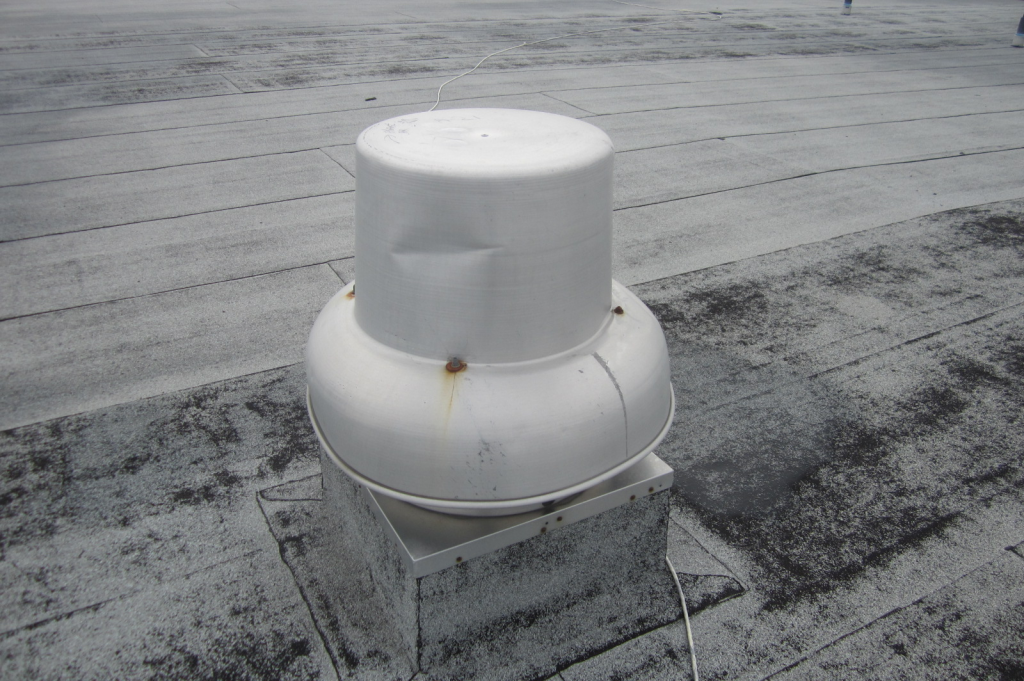
Pictured above is a roof fan. It isn’t new, obviously, but it may not be all that old either. Sure, it has a dent in the housing, but that probably doesn’t impact its performance significantly. In fact, based on appearance alone, this fan doesn’t really indicate any obvious current or impending problems.
We can make a few educated guesses about its condition and reliability. The aged roofing surrounding it may help us estimate its approximate age. The rusted screw heads may indicate that it isn’t serviced regularly. If we were standing next to it, we could listen to it, observe its operation, and determine whether it is vibrating excessively or sounds like the belt is worn. We might even use predictive maintenance tools such as vibration analysis or infrared thermography to identify developing problems before they result in a failure.
However, appearances can be deceiving.
Despite the visual clues in the photo, this fan could actually be in excellent condition. The motor and belts may have been replaced recently, the fan may have been properly balanced, and it could have years of reliable service still ahead of it. Conversely, it could be on the verge of failure despite looking perfectly acceptable.
The reality is that we simply cannot determine its true condition from a photograph alone.
So how do we determine the current condition of this equipment—or any equipment, for that matter? More importantly, how do we determine the right time to replace it?
The answer lies in the equipment’s history.
“What equipment history?” you ask.
Hopefully, the owner of this fan has a maintenance department that uses some type of maintenance management system—preferably a Computerized Maintenance Management System (CMMS). Even manual recordkeeping systems, though increasingly rare, can be highly effective if they are maintained consistently and accurately.
You don’t necessarily need a large maintenance budget to properly track preventive, predictive, and reactive maintenance activities, but you do need to be diligent about documenting them. The information collected over time is a gold mine and should be treated as such.
Too often, organizations focus all of their attention on ensuring that preventive maintenance tasks are completed or that service calls are addressed promptly. Those activities are certainly important, but don’t overlook the value of recording the results.
Properly maintained records showing the equipment’s age, maintenance history, repairs performed, replacement parts installed, and associated costs become invaluable when deciding whether it makes sense to replace the motor in that fan—or replace the fan altogether.
Suppose you researched this particular fan and discovered that the motor had already been replaced several times. That might suggest there are underlying issues that make continued investment a poor decision. Perhaps the motor mounts have cracked after years of vibration, causing repeated motor failures. Maybe the fan wasn’t constructed with materials suitable for its operating environment. Or perhaps the equipment was improperly selected for the application in the first place.
On the other hand, maybe this fan has been exceptionally reliable and has required nothing more than routine lubrication and periodic belt replacements. If that’s the case, replacing it simply because it “looks old” could be a poor use of capital.
Without the equipment’s maintenance history, you’re left making an educated guess. With it, you’re making an informed business decision.
Here’s a simple challenge for maintenance and facilities managers.
Could you randomly select a piece of equipment from your building’s asset inventory and determine—based solely on its maintenance history—whether it is approaching the end of its useful life or is likely to provide many more years of reliable service?
If the answer is “no,” ask yourself why.
Good maintenance records are about much more than documenting completed work orders. They become the foundation for better budgeting, improved reliability, fewer emergency repairs, and smarter capital planning. They allow organizations to replace equipment because the data says it’s time—not because someone guessed.
At Michaud Engineering, we help organizations develop comprehensive equipment inventories, maintenance programs, and long-term capital planning strategies that transform maintenance records into actionable information. Sometimes the smartest decision is replacing equipment before it fails. Other times, it’s confidently keeping that equipment in service for years to come.
The key is having the information needed to know the difference.
Do you have ideas on other topics for this feature? Post them in the comments on LinkedIn, Instagram, Twitter or Facebook. .